
Disclosure: denali-plow.com participates in the Amazon Services LLC Associates Program, an affiliate advertising program designed to provide a means for sites to earn advertising fees by advertising and linking to Amazon.com.
The Polaris Ranger is one of the most popular side-by-sides in North America, and for a lot of owners it spends the winter doing a very different job than it does in summer: clearing driveways, farm lanes, gravel roads and parking areas. A good plow turns the Ranger into a surprisingly capable snow-removal machine. A bad match, though, means a blade that scrapes, a mount that rattles, or a winch that gives up halfway through the first storm.
Denali sells two lines of blades that fit a wide range of UTVs, the Standard Series and the Pro Series. This guide explains how they differ, which one suits which kind of snow, how mounting works on a Ranger, what else you need to buy, and how to avoid the mistakes new plow owners make. Everything here is meant to help you narrow down the right kit before you click through to compare current prices on Amazon.
Quick answer: which Denali plow for a Ranger?
- Light to moderate snow, residential driveway, simple setup: the Standard Series straight blade is usually enough.
- Wet, heavy snow, long driveways, drifting or frequent plowing: step up to the Pro Series curved blade.
- Large areas where you constantly change blade angle: add the Hydro-Turn hydraulic system on top of either line.
The rest of this article explains the reasoning, so you can make the call for your own machine and your own winters.
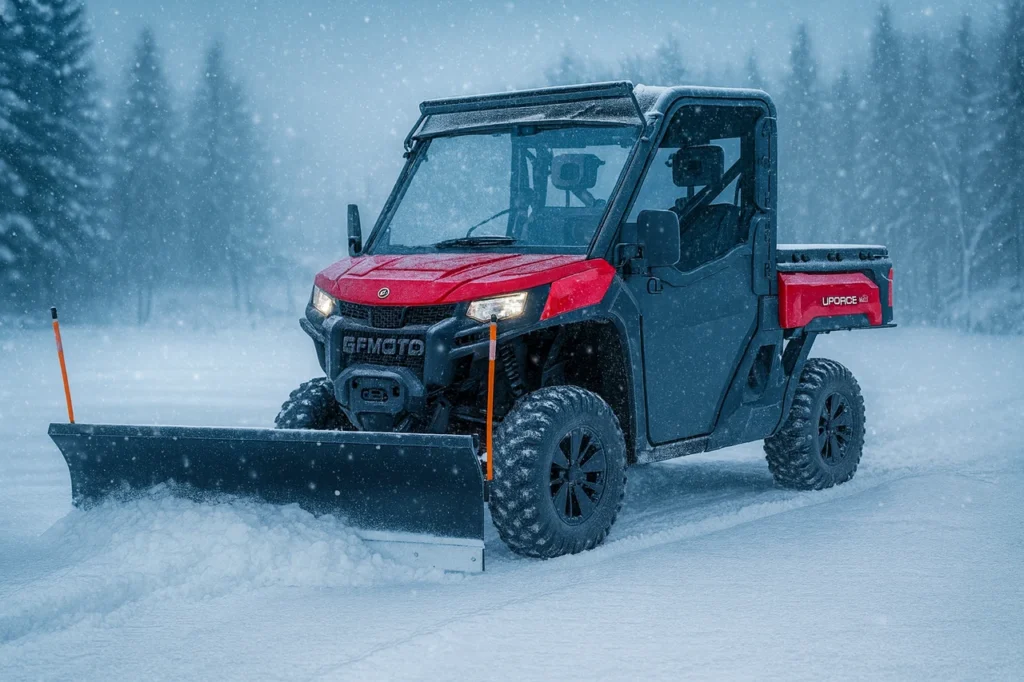
The Standard Series: straight blade, simple and capable
The Standard Series uses a straight blade formed from 11-gauge steel, designed for light-to-moderate snow loads. Retailer listings also describe vertical ribs and horizontal stabilizers across the blade that add stiffness, plus a replaceable wear bar along the cutting edge. A straight blade pushes snow ahead of it and to the side as you angle it, which makes it predictable and easy to learn on.
For a typical suburban or rural driveway, a few inches of snow at a time, and a Ranger that plows a handful of times each winter, the Standard Series covers the job without extra cost or complexity. It is also the easier blade to repair and adjust, with fewer curves to align and fewer places for packed snow to cling.
The Pro Series: curved County-style blade for heavy snow
The Pro Series uses a curved, County-style blade in 12-gauge steel. The curve is the point of the design: instead of stacking snow in front of the blade, a curved moldboard rolls the snow up and over, throwing it farther to the side. That matters most when snow is wet, dense or deep, which is exactly when a straight blade starts to bog down.
A quick note on steel gauge, because it confuses a lot of buyers: gauge numbers run backwards, meaning a lower number is thicker sheet steel. So you cannot judge the two blades by comparing 11 and 12 alone. How a blade performs depends on its shape, its ribbing and reinforcement, and its overall construction, not just the sheet thickness. The practical difference is the curved profile and how it handles heavy snow.
If you plow often, live in a heavy-snow region or clear a long driveway, the Pro Series is the blade many owners end up wishing they had bought the first time.
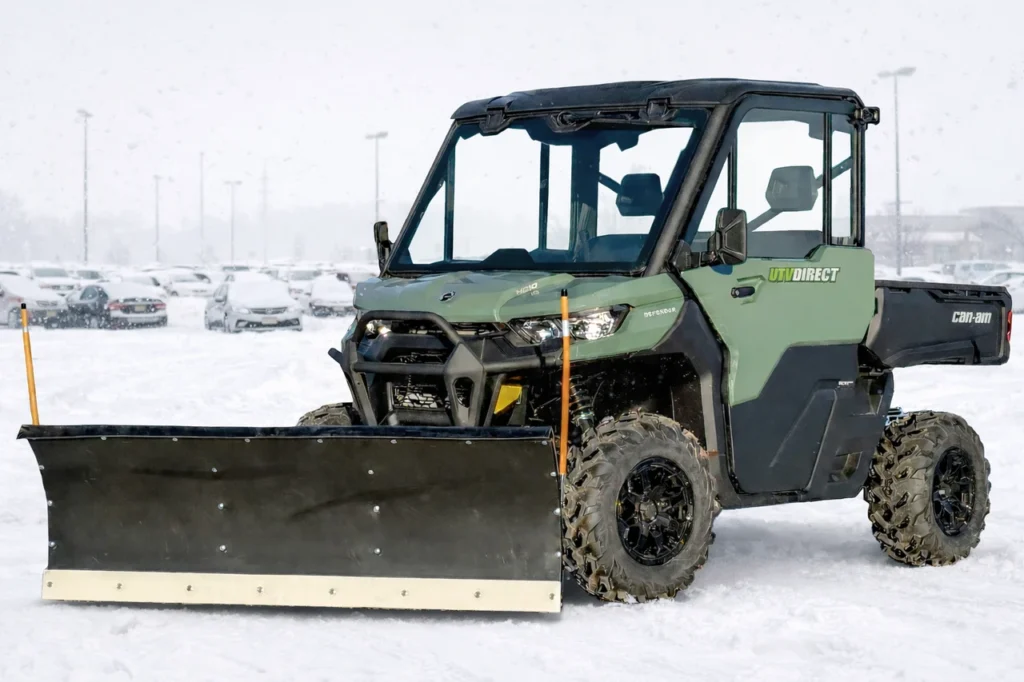
Side-by-side summary
- Blade shape: Standard is straight; Pro is curved County-style.
- Steel: Standard lists 11-gauge; Pro lists 12-gauge with a curved, reinforced design.
- Best snow: Standard for light-to-moderate loads; Pro for wet, heavy snow and longer throws.
- Learning curve: Standard is the simplest; Pro takes a little practice to angle and feather.
- Compatible upgrades: both lines work with Denali mount plates, pushtubes, lift kits and winch accessories.
Mounting a Denali plow on a Polaris Ranger
Denali makes laser-cut, model-specific mount plates for a wide range of UTVs, including Polaris Ranger and General machines, and also offers a universal 2-inch receiver option. The mount plate is designed to stay on the frame permanently. When the season ends, the blade assembly detaches with a pull-pin system, so you are not hauling a plow around all summer.
Fitment varies by Ranger generation, size class and model year, so never order a mount on model name alone. Check the exact year, engine and trim on the product listing. As an example of how Denali builds model-specific hardware, see the mount plate for 2015–2023 Polaris RZR XP900/XP1000, and browse the full range in the Denali mounts and attachments collection to find the plate that matches your Ranger.
You need a winch
Denali plows use a winch to raise and lower the blade, and the winch is not included in the kit. Denali recommends pairing its plows with a VIPER Elite, VIPER Max or VIPER Midnight winch. If your Ranger does not already have one, budget for it before you buy the blade. See the Denali winches collection for options, and read our guide on whether your UTV needs a winch for a snow plow for the full explanation.
Accessories worth buying with your plow
- A plow pulley and aluminum fairlead kit to route the winch cable cleanly and reduce wear.
- A pushtube lift kit (2 or 4 inches) if your machine has aftermarket skid plates or sits higher than stock.
- Extended pushtubes if you need extra clearance between blade and frame.
- The Hydro-Turn hydraulic system with dash switch if you want to change blade angle from the seat.
You can browse more add-ons in the Denali accessories collection.
Setup and plowing tips for Ranger owners
- Do a dry run. Lay all parts out, match them to the parts list, and install on a dry day in the garage. A first install can take several hours.
- Add ballast to the rear. Many guides recommend adding weight in the cargo bed to offset the plow’s weight over the front axle and keep the front end from lifting and steering lightly.
- Check traction. Good tires or chains make a bigger difference than a bigger blade. A machine that spins cannot push snow.
- Plow in small passes. Take shallower bites on deep or wet snow rather than trying to push everything in one run.
- Angle with the wind. Throw snow downwind so it does not blow back across your cleared lane.
- Protect your gravel. Set the blade height or skid feet so the edge rides just above gravel instead of digging into it.
- Inspect after each storm. Check the wear bar, pins, bolts and winch cable, and tighten anything that has worked loose.
Common mistakes to avoid
- Ordering a mount plate without confirming the exact model year.
- Forgetting the winch, which is sold separately.
- Buying a blade that is too wide for the machine’s weight and traction.
- Skipping ballast and then fighting a light front end.
- Leaving packed snow on the blade and mount, which accelerates corrosion.
Frequently asked questions
Can I leave the mount plate on all year?
Yes. The mount plate is engineered to stay on the frame permanently, and the blade assembly detaches with a pull-pin system when snow season ends.
Which Denali plow is better for a Ranger, Standard or Pro?
Standard is fine for light-to-moderate snow and driveways. Pro is better if you plow wet, heavy snow, long distances or deep drifts.
Does a Ranger need a lift kit?
Only if you run aftermarket skid plates or your machine sits higher than the standard configuration accommodates. Lift kits raise blade clearance by 2 or 4 inches.
Is a winch really required?
Yes. All Denali plow systems use a winch to raise and lower the blade.
Our recommendation
For most Ranger owners clearing a residential driveway, the Standard Series is the sensible starting point. If you regularly face heavy, wet snow or long runs, step up to the Pro Series, and add Hydro-Turn if you will be changing angle constantly. Whichever you choose, confirm fitment for your exact Ranger, plan for the winch, and compare current options in the Denali plow systems collection.